
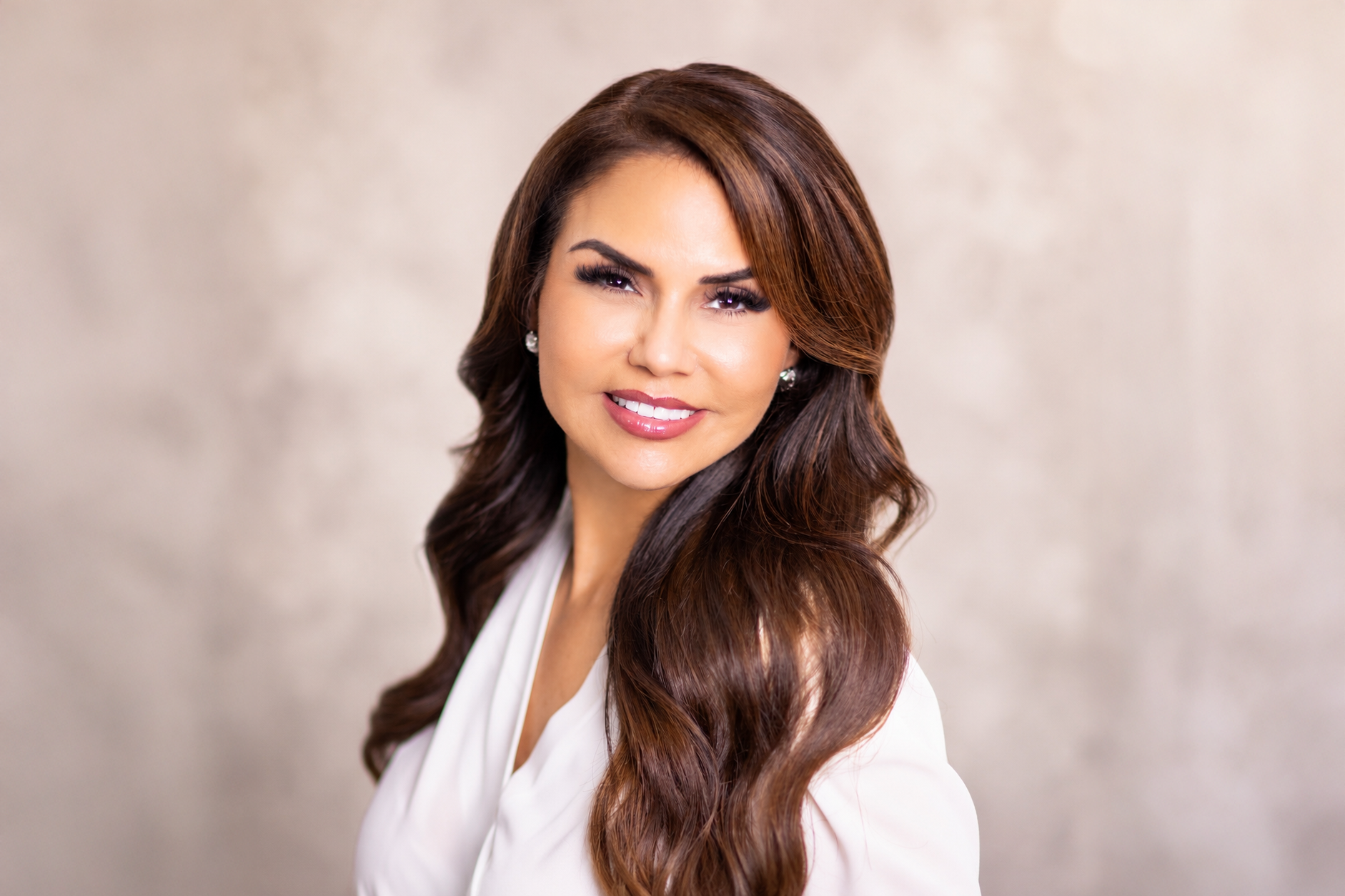
Dr. Yasmin Davidds is an entrepreneur, organizational psychologist, and CEO of the Multicultural Women Executive Leadership Foundation, the Women’s Institute of Negotiation, and the Dr. Yasmin Davidds Leadership Institute—organizations dedicated to the teaching, instruction, and development of leadership competencies primarily focused on women in professional, corporate, academic, and entrepreneurial settings. She will lead the “Women and Wealth” panel at the 2026 Women in Power Spaces (WiPS) Convening.
WiPS: We first saw the magic of a Dr. Davidds presentation at a California Community College Chancellor’s Office conference in which you were discussing the Women’s Equity and Empowerment Certificate Program (WEECP). How and why did you want to get involved with the Chancellor’s Office to create this program?
Yasmin: In 2022, Interim Chancellor Dr. Daisy Gonzales asked me to co-create, with the Chancellor’s Office, the Women’s Equity and Empowerment Certificate Program (WEECP). Dr. Gonzales had been a supporter of my work for many years and had witnessed the transformational process women experienced through my leadership programs. She understood that the work was not simply about professional development; it was about helping women build agency, confidence, voice, and the ability to lead from a deeper sense of internal authority.
Her goal was for me to work with EdInsights, an evaluation organization, to co-design a program that would build agency for women faculty, administrators, and staff throughout the 116 California Community Colleges. Just as importantly, she wanted us to create a model that could be evaluated, studied, and measured so that the impact of the work could be documented in a meaningful way.
Since its launch, more than 300 women throughout the state have graduated from the program, which speaks to both the need for this work and the power of creating leadership development experiences that are deeply relevant, culturally responsive, and measurable.
That invitation was deeply aligned with my life’s work. I have always believed that leadership development should not be reserved for those who already have access to power. The California Community Colleges system is one of the most powerful engines of social and economic mobility in our state, and the women who serve within that system are often doing extraordinary work while navigating complex institutional, cultural, and personal demands.
WEECP was designed to meet women where they were and help them build the confidence, language, and practical tools to lead with greater clarity, agency, and influence. I wanted the program to help women recognize that their lived experience was not a limitation, but a source of wisdom and leadership power.
For me, this work was both personal and professional. As a woman who has had to learn how to claim my voice in rooms that were not always built for me, I know how transformational it can be when women are given the tools to name their value, negotiate for their future, advocate for themselves, and lead from the inside out.
What made the partnership with the Chancellor’s Office so meaningful was the scale of impact. We were not only supporting individual women; we were contributing to a larger vision of equity, access, and empowerment across the California Community Colleges system. That is the kind of work I am most drawn to: work that changes individual lives while also strengthening institutions, communities, and the systems that shape opportunity.
WiPS: In 2011, you founded the Women’s Institute of Negotiation (WIN) to enhance women’s negotiation skills and business acumen, and you’ll be moderating the WiPS panel on “Women and Wealth.” Why do you think it’s so important for women to take control of their money?
Yasmin: I strongly believe that money is not only financial. It is deeply connected to freedom, choice, safety, dignity, and power.
When women take control of their money, they are not simply managing numbers. They are shaping the terms of their lives. They are expanding their ability to make decisions, leave unhealthy situations, invest in their growth, care for their families, build businesses, create legacy, and participate more fully in the world.
I founded WIN because I saw too many brilliant, talented, hardworking women under-ask, under-earn, and underestimate the value of their contributions. Many women were taught to work hard, be grateful, and hope to be recognized. But hope is not a financial strategy. We have to teach women how to ask, how to negotiate, how to understand their worth, and how to make decisions from a place of knowledge rather than fear.
For multicultural women in particular, money can carry layers of meaning. It may be connected to family responsibility, cultural expectations, scarcity, sacrifice, or the pressure to succeed not only for oneself, but for an entire community. That is why conversations about women and wealth must go beyond budgeting or investing. They must include identity, confidence, self-advocacy, negotiation, and the courage to believe that women are worthy of abundance.
When women take control of their money, they take control of their options. And when women have options, they lead differently. They live differently. They give differently. They build differently.
That is why this conversation matters so much.
WiPS: Yasmin, your life’s work has been devoted to advancing women—particularly multicultural women—into positions of leadership, influence, and power. Why are you so drawn to this space?
Yasmin: My life’s work has been devoted to advancing women, especially multicultural women, because, as a child, I witnessed what happens when a woman does not believe she has the power, language, or resources to advocate for herself.
My mother was in an abusive situation, and she felt helpless. She did not speak English, she had a third-grade education, and she could not see a way out. Not because she lacked strength, but because she had not been equipped with the tools, confidence, support, or internal authority to believe that another life was possible.
Watching her experience shaped me deeply.
I made a commitment that my work would be about helping women never feel trapped by silence, fear, lack of access, or the belief that they have no options. I wanted to equip women with the agency, voice, confidence, and practical tools to advocate for themselves, negotiate for their futures, and find a way forward no matter what circumstances they are facing.
That is why I am so drawn to this space.
For me, advancing women is not simply professional work. It is personal. It is generational. It is a promise I made early in life that if I could help women see their own power, claim their voice, and build the confidence to make courageous choices, then I would dedicate my life to that work.
I am especially passionate about multicultural women because so many of us carry layers of responsibility, cultural expectations, family histories, and systemic barriers that can make self-advocacy feel complicated. Many women have been taught to endure, to sacrifice, to be grateful, to stay quiet, or to make themselves smaller in order to survive.
But I believe women deserve more than survival.
- They deserve agency.
- They deserve internal authority.
- They deserve tools to lead their lives, not just manage them.
- They deserve to know that their story, their voice, and their lived experience are sources of wisdom and power.
My work is about helping women become so deeply anchored in who they are that they can walk into any room, any challenge, or any season of life with the belief that they are not helpless. They have choices. They have voices. They have power. And they can find a way forward.
WiPS: In addition to your many other hats, you also run the Dr. Yasmin Davidds Leadership Institute. What can you tell us about the women you work with? Have you noticed any trends in how and why women become interested in leadership and what would you say the common challenges are for women in the spotlight?
Yasmin: The women I work with are powerful, purpose-driven, and often carrying far more than people realize. They are executives, entrepreneurs, educators, professionals, community leaders, students, and emerging leaders. Many are multicultural women who have achieved success while navigating systems where they have had to prove themselves repeatedly.
One of the trends I have noticed is that many women become interested in leadership not because they want a title, but because they want to make a difference. They are drawn to leadership because they see something that needs to change. They want to create access, build stronger teams, support their communities, improve institutions, and use their influence in a meaningful way.
But the challenges are real.
Women in the spotlight often face a unique level of scrutiny. They are expected to be strong, but not too strong. Confident, but not intimidating. Warm, but not emotional. Ambitious, but not self-promoting. They are often managing the tension between visibility and vulnerability, excellence and exhaustion, power and likability.
For multicultural women, there can be additional layers. They may be carrying the pressure of representation, the expectations of family or community, and the emotional labor of navigating rooms where they are one of few or the only. Many are high achievers who have learned how to perform at exceptional levels, but they have not always been given permission to protect their energy, set boundaries, or lead in a way that is sustainable.
At my Institute, we help women understand that leadership is not only about performance. It is about identity. It is about emotional intelligence. It is about self-awareness, communication, boundaries, courage, and the ability to remain grounded under pressure.
The women I work with are learning how to become the best, most powerful versions of themselves. They are learning to lead with greater clarity, confidence, courage, and authenticity — not by becoming someone different, but by becoming more fully aligned with who they already are.
WiPS: You have a background as an Organizational Psychologist and your latest book, Graciously Assertive: How Becoming a Better Human Makes You a Better Leader (2024), examines how leadership rooted in emotional intelligence and courageous communication can change lives and communities. Can you tell us more about this intersection of psychology, leadership and identity?
Yasmin: The intersection of psychology, leadership, and identity is at the heart of all my work.
Leadership is not simply a set of external behaviors. It is an internal operating system. How we lead is shaped by how we see ourselves, how we manage emotion, how we respond under pressure, how we communicate when the stakes are high, and how much permission we give ourselves to take up space.
My background in organizational psychology helps me look beneath the surface. When a leader struggles to speak up, negotiate, set a boundary, or make a difficult decision, the issue is rarely just a skill gap. Often, it is connected to identity, conditioning, fear, belonging, self-trust, or past experiences that shaped how they learned to survive and succeed.
That is why I wrote Graciously Assertive. I wanted to offer a model of leadership that does not force people to choose between strength and compassion. Graciously Assertive Leadership is about leading with clarity, courage, emotional intelligence, and respect for human dignity. It is the ability to tell the truth without diminishing others, advocate for yourself without apology, and communicate with both conviction and care.
When people become more self-aware, more emotionally grounded, and more aligned with their values, they lead differently. They make better decisions. They build more trust. They create healthier cultures. They stop leading from reactivity and begin leading from internal authority.
For me, “Better Human. Better Leader.” is not a slogan. It is a philosophy. The more we develop our humanity—our self-awareness, compassion, courage, accountability, and capacity to connect—the more powerful and transformative our leadership becomes.
Leadership rooted in humanity does not only change organizations. It changes families, communities, and the way people experience their own possibility.
Find out more about Yasmin at https://dryasmininstitute.com/. And don’t miss Dr. Davidds leading the “Women and Wealth” panel at the 2026 WiPS Convening. Get your tickets now!